
A crooked, scraping or hard-to-latch pocket door may need an alignment repair, but the symptom alone does not identify the adjustment. Hangers, guides, track condition, panel shape and nearby obstructions can affect operation. Start with observations you can make without dismantling the door, then identify the installed hardware before any adjustment.
Smooth Sliders provides pocket door repair and installation for homes and businesses in Broward, Miami-Dade and Palm Beach Counties.
Step 1: Note where the door catches
If the panel remains securely supported and moves normally enough to observe it, note whether it rubs near the floor, at the jamb or at one point in its travel. Look at the visible clearance around the opening and record whether the latch meets the strike. Photos and a description of when the issue began can help the technician.
If the panel is dropping, leaning markedly, loose from its support or stuck, stop operating it. Do not force it, push it farther into the pocket or attempt to lift it back into place.
Step 2: Identify the hardware system
Look for manufacturer information in existing paperwork or on accessible components. Pocket door systems differ in their hanger connection, service access, adjustment mechanism and required clearances. A generic wrench size, screw direction or floor gap is not a reliable specification for every installation.
For example, Johnson Hardware provides specifications and installation instructions for its 100PD system. Use the instructions for the actual model fitted to your door, rather than applying an unrelated diagram.
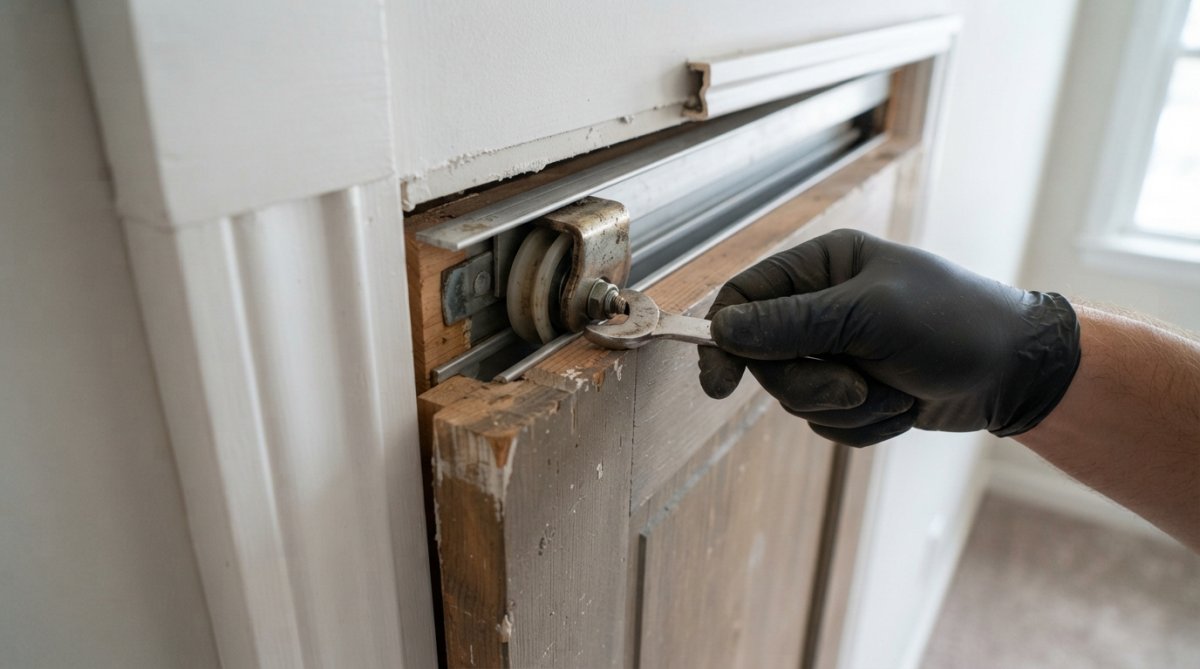
This illustration shows hardware adjustment. It does not establish which tool or procedure is suitable for your installed door.
Step 3: Check accessible obstructions and guides
With the door stationary, look for visible debris or an object blocking its path. Clear only loose material you can reach without putting your fingers into the mechanism or releasing hardware. A guide, stop or fastener that appears displaced is useful information for an inspection.
Do not insert longer screws into the pocket wall as a trial repair; their position and length need to suit the installation. Do not spray a general lubricant into the track or hangers. Follow the manufacturer’s care instructions for any approved cleaning or lubrication.
Step 4: Have the alignment and support assessed
A technician can determine whether adjustment is appropriate or whether a worn component, loose connection, damaged track or panel problem needs repair. Adjustment should remain within the hardware’s specified range. Turning a screw until the panel moves does not confirm that the supporting connection is sound.
Some installations provide access through the opening or removable trim. Others need additional access. Confirm the proposed method and any finishing work before approving trim removal or wall cutting. Avoid a universal lift-and-tilt removal procedure: supporting and releasing the panel depends on its hardware.
Step 5: Check travel and latching after repair
After the work, the door should be checked through its normal travel for rubbing, binding and secure support. Guides, stops and any soft-close components should operate as intended for that model. Check that the latch engages and releases normally.
A latch problem can involve the latch itself, its strike or the position of the panel. Moving the strike before assessing the door may conceal the original alignment issue. If the door starts catching again, arrange a follow-up assessment rather than repeating larger adjustments.
Does poor alignment mean the door needs replacing?
Not necessarily. A sound panel and frame may be retained when suitable adjustment or hardware repair resolves the problem. Replacement deserves consideration when components are seriously damaged, compatible parts cannot be sourced or the proposed repair would leave significant problems unresolved.
Compare the specific repair scope with the complete replacement scope. Our guide to pocket door repair vs. replacement cost explains what to ask about parts, access and finishing.
Schedule pocket door alignment repair in South Florida
Family-owned Smooth Sliders has served South Florida since 2007. Call 954-818-9607 or request a free pocket door repair estimate. Tell us your location and whether the door drags, tilts or will not latch. Appointment timing depends on availability and required parts.