Table of Contents
- Common Causes of a Sliding Door Going Off Track
- How to Clean Sliding Door Tracks
- When Sliding Door Roller Replacement Is the Answer
- How to Adjust Sliding Door Rollers and Track
- Sliding Door Track Repair Cost: What to Expect
- When to Call a Professional for Sliding Door Repair
- Conclusion
- Frequently Asked Questions
Last Updated: September 29, 2026
Common Causes of a Sliding Door Going Off Track
A sliding door off track usually comes down to a handful of predictable reasons: worn rollers, a bent track, debris buildup, or a frame that has settled out of square. At Smooth Sliders, we’ve answered this call across South Florida for over 19 years, and the diagnosis is usually one of these four issues.
The good news? Most of these problems are fixable without replacing the door.
Here’s what’s actually happening when your door jumps the rail:
- Worn rollers lose their shape and drop the door panel
- Debris in the track lifts the rollers off the rail
- Bent tracks force the door to climb the side wall
- Frame settling twists the opening out of square
Each cause has a different fix. Misdiagnosing it wastes money and time.

Worn Rollers and Damaged Roller Assemblies
Rollers are the most common culprit. Roller assemblies carry the full weight of the door, and they wear out faster than anything else on the unit.
Look for these signs:
- The door drags or scrapes when you slide it
- You hear grinding or rumbling
- The panel sits lower than it used to
- The door wobbles side to side
Nylon rollers typically last several years before flat spots develop.
Bent or Misaligned Tracks
A bent track is easy to spot once you know what to look for. Run your hand along the rail. Any kink, dent, or twist means the door has nowhere smooth to roll.
How to Clean Sliding Door Tracks
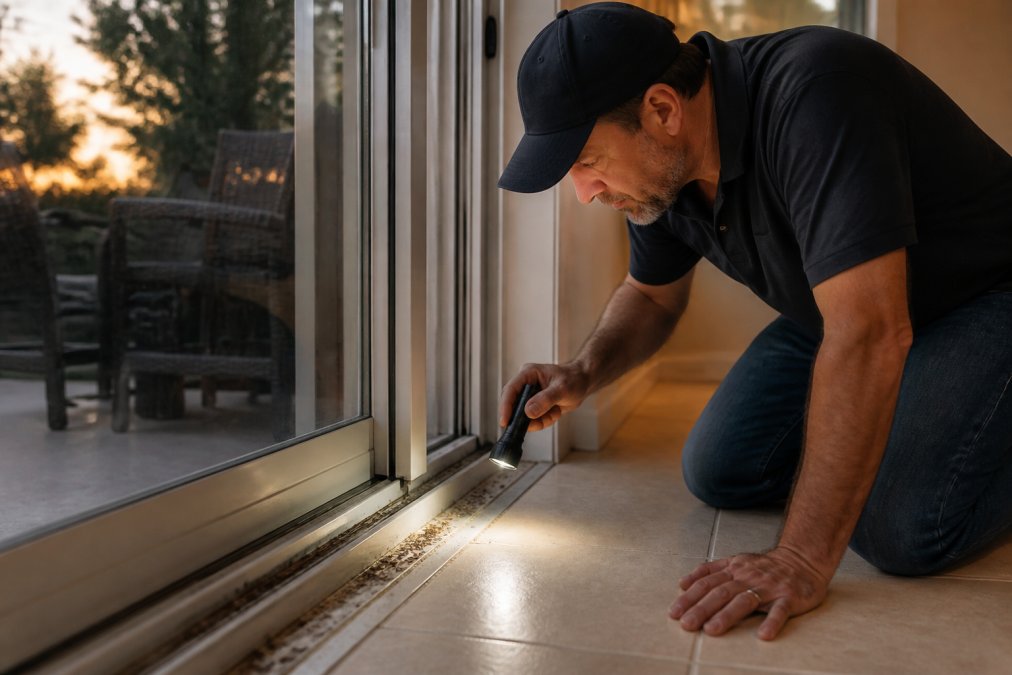
Cleaning the tracks is the first thing to try, and it solves a surprising number of off-track complaints. Debris accumulation is the cheapest problem to fix and the most overlooked. But the track material changes how you clean it, and getting that wrong can scratch the rail, strip a finish, or leave grit behind that keeps lifting the rollers.
Match Your Cleaning Method to the Track Material
Vinyl tracks are the most common on residential sliding glass doors. They scratch easily, so skip metal brushes and abrasive pads. Use a nylon-bristle brush, warm water, and a few drops of mild dish soap. Vinyl also holds static, which pulls fine dust back into the channel, a dry microfiber wipe after cleaning cuts that down.
Step-by-Step Cleaning
- Vacuum loose dirt with a brush attachment, do this before any liquid, or you’ll make mud
- Scrub the channel with a brush matched to your track material and warm soapy water
- Wipe out the residue with a damp cloth, working corner to corner
- Dry the track completely, moisture plus debris is what gums up rollers
- Apply a silicone-based lubricant to the rail, not oil
Skip the WD-40. Oil-based sprays attract dirt and make the problem worse within weeks. A dry silicone spray or a dedicated track lubricant keeps things slick without gumming up. If you’re unsure which product to grab, look for a label that says “dry” or “silicone” and avoid anything that lists petroleum distillates first.
A Quick Diagnostic While You Clean
Cleaning is also your best chance to spot the real problem. As you work the channel, watch for these:
- Grit that returns within days, the rollers are shedding material and need replacement
- A visible dip or kink in the rail, the track is bent, and cleaning won’t fix it
- Rust streaks on an aluminum or steel rail, moisture is pooling, often from a clogged weep hole
- A rail that’s shiny on one side and dull on the other, the door is riding off-center and the rollers need adjustment
Clean your tracks twice a year, and before every hurricane season. Salt air and fine sand work into the channel fast, and a clean track is the single best way to prevent a door from jumping the rail. On vinyl and wood tracks, use the gentlest method that gets the job done, you can always scrub harder, but you can’t un-scratch a rail.
When Sliding Door Roller Replacement Is the Answer
Sliding door roller replacement is the fix when cleaning and adjusting don’t stop the door from binding. If the rollers are flat, cracked, or noisy after a good clean, they’re done.
- Lift the door panel out of the track
- Locate the roller assembly at the bottom corners
- Remove the old roller and note its size
- Install the new roller in the same position
- Set the door back and test the slide
How to Adjust Sliding Door Rollers and Track
Adjustment is the next step when the door sits too low or rubs the frame. Most doors have a vertical adjustment screw on the roller assembly that raises or lowers the panel, but not all of them, and turning the wrong screw is how DIYers strip an adjuster and turn a ten-minute fix into a parts order.
Identify Your Adjuster Type First
There are three common adjuster styles, and the tool and direction differ for each:
- Phillips or flathead screw on the bottom roller, the most common. Access it through a small slot at the bottom edge of the door, or by popping off a plastic cap. Turn clockwise to raise, counterclockwise to lower.
- Hex (Allen) adjuster, common on heavier impact-glass panels. You’ll need the right hex key; a loose fit rounds the socket fast. Same clockwise-up rule.
- Cam or eccentric adjuster, found on some pocket and closet doors. A partial turn moves the roller a lot, so go in eighth-turn increments and test after each.
Adjusting Roller Height
Turn the screw clockwise to raise the door, counterclockwise to lower it. Make small turns, a quarter turn at a time, and test the slide after each one. Work both rollers evenly, raising one side only tilts the panel and makes it bind at the opposite jamb.
Your goal is a door that:
- Clears the track without dragging
- Sits level with the frame
- Slides with light push
- Locks without force
Diagnosing Roller vs. Track Before You Adjust
Before you touch a screw, figure out which part is actually out of spec. A quick test: slide the door to the middle of the opening and push up gently on the bottom edge. If it lifts freely and drops back with a clunk, the rollers are loose or worn. If it feels tight or scrapes along one section of travel, the track is the problem.
Repairing Bent Tracks
A slightly bent track can often be straightened. A badly kinked one needs replacing.
For a minor bend:
- Place a block of wood against the rail
- Tap gently with a rubber mallet
- Check the rail with a level
- Repeat until the rail is straight
Adjusting a heavy impact-glass panel solo is how people get hurt. If the door weighs more than you can comfortably lift with one hand on each edge, get a second person before you start turning screws. A panel that drops off a raised roller can crack the glass and bend the track on the way down.
Sliding Door Track Repair Cost: What to Expect
Sliding door track repair cost depends on what’s actually wrong. A simple clean and adjust is far cheaper than a full track replacement, and a roller swap sits somewhere in between.
| Problem | Typical Fix | DIY or Pro |
|---|---|---|
| Dirty track | Clean and lubricate | DIY |
| Worn rollers | Roller replacement | DIY or Pro |
| Slight track bend | Straighten and realign | Pro |
| Badly bent track | Track replacement | Pro |
| Frame settling | Header and frame repair | Pro |
| Heavy impact glass | Full panel service | Pro |
Never force a stuck door panel. Forcing a heavy glass door can crack the glass, bend the track further, and turn a small repair into a full replacement. If the door won’t move with a light push, stop and diagnose.
When to Call a Professional for Sliding Door Repair
Call a professional when the door is heavy, the track is bent, or the frame has settled. These jobs need the right tools and a second set of hands.
Signs it’s time to call:
- The door won’t lift out of the track
- The track is cracked or badly bent
- The frame is out of square
- The door is impact glass
- You’ve tried cleaning and adjusting with no luck
Conclusion
A sliding door that keeps going off track is usually a roller, track, or frame problem, and most cases are fixable without a full replacement. Start with a clean track and a silicone lubricant. If that doesn’t do it, check the rollers and the rail.
Frequently Asked Questions
How to fix a sliding door that keeps coming off the track?
Start by removing the door panel to inspect the rollers and track. Clean out any debris, then check if the rollers are worn or the track is bent. Adjust the roller height screws to level the door, or replace damaged rollers. If the track is bent, it may need to be repaired or replaced. For heavy glass doors, get help lifting the panel to avoid injury.
What are the common problems with sliding doors?
The most frequent issues include worn nylon rollers, debris accumulation in the track, bent or misaligned tracks, and header settling that throws the door out of plumb. Door binding, difficulty locking, and gaps in weather stripping are also common. Regular cleaning and lubrication can prevent many of these problems.
How much does it cost to repair an off-track sliding glass door?
Sliding door track repair costs vary based on the damage and parts needed. Minor adjustments or cleaning may be affordable, while roller replacement or track repair costs more. For an accurate estimate, contact a professional like Smooth Sliders for a free assessment. Pricing depends on the specific issue and door type.
How do I adjust the rollers on my sliding glass door?
Locate the adjustment screws on the bottom rollers, usually accessible through a small hole in the door frame. Turn the screws clockwise to raise the door or counterclockwise to lower it. Make small adjustments and test the door’s movement. If the door still binds or comes off track, the rollers may need replacement or the track may be damaged.