
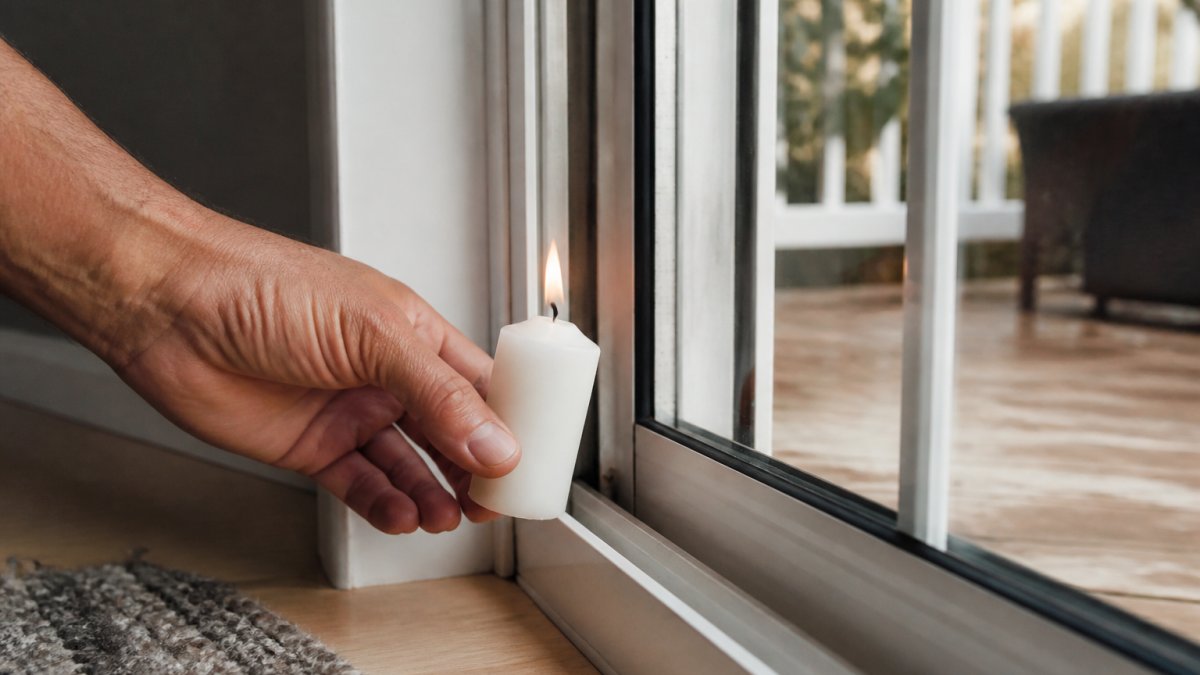
Drafty patio door or a panel that no longer closes evenly? This guide explains sliding glass door weatherstripping, roller alignment and energy-efficiency options. For a local inspection, call 954-818-9607 or request a free estimate. Do not use a candle or other open flame to check for drafts; the illustration below is not a recommended testing method.
Table of Contents
- Diagnose Energy Loss: Where Your Sliding Glass Door Is Failing
- Sliding Glass Door Drafts and Air Leaks: Root Causes
- Sliding Glass Door Weatherstripping Replacement and Caulking
- Sliding Glass Door Track and Roller Maintenance
- Low-E Glass Sliding Patio Doors and Thermal Performance
- Thermal Curtains, Blinds, and Window Coverings for Year-Round Efficiency
- Repair vs. Replacement: When to Fix or Upgrade Your Door
- Frequently Asked Questions
Last Updated: October 13, 2026
Diagnose Energy Loss: Where Your Sliding Glass Door Is Failing
To improve the energy efficiency of sliding glass doors, start by checking how the door closes and where drafts occur. Smooth Sliders inspects sliding door rollers, tracks, locks and alignment in Broward, Miami-Dade and Palm Beach Counties.
Before spending money on repairs or replacement, run this diagnostic check. A visual check can reveal obvious problems, but hidden leaks or installation defects may need a professional assessment.
Check for visible gaps and air leakage around the frame
Walk around your sliding glass door in daylight and look for visible separation between the frame and the wall. Gaps wider than a credit card indicate installation or settling issues. Pay special attention to the corners and the bottom of the frame, where air leakage tends to concentrate.
Feel for drafts and cold spots
On a cold day, move your hand slowly around the entire door perimeter, top, sides, and bottom. You’ll feel cold air movement if seals are compromised.
Inspect glass pane condition and condensation
Condensation between glass panes indicates a failed seal. If you see moisture, fog, or visible droplets trapped inside the glass unit, the insulated glass seal has broken and the door is no longer performing as designed. Single-pane glass generally insulates less effectively than comparable insulated glass. A lack of visible condensation does not prove that a door is airtight or that its insulated glass unit is performing correctly.
Sliding Glass Door Drafts and Air Leaks: Root Causes
Drafts don’t appear randomly. They result from specific failures in the door assembly, and understanding which failure you’re dealing with changes how you fix it. Common contributors include worn seals, gaps around the frame and the thermal performance of the glass and frame.
Worn seals and weatherstripping breakdown
Weatherstripping degrades over time through UV exposure, temperature cycling, and friction from door operation. The rubber or foam seal compresses, shrinks, or hardens, losing contact with the frame.
Inspect your weatherstripping closely. If it’s cracked, compressed flat, or no longer makes contact with the frame when the door closes, replacement is necessary.
Poor installation and frame gaps
If your door was installed incorrectly or the rough opening wasn’t sealed properly during construction, gaps exist between the frame and the surrounding wall structure. These gaps bypass the weatherstripping entirely.
This is where professional assessment matters. The frame may sit flush on the interior but have gaps on the exterior or within the wall cavity.
Single-pane glass and thermal performance gaps
Single-pane glass conducts heat and cold directly through the glazing. It provides almost no insulation value. Double-pane glass creates an air gap (or argon gas fill) that acts as insulation.
If your door has single-pane glass, improving energy efficiency through sealing alone won’t deliver the results you’re looking for. The glass itself is the limiting factor.
Sliding Glass Door Weatherstripping Replacement and Caulking
Replacing worn, compatible weatherstripping and addressing confirmed air leaks may improve sliding glass door energy efficiency. This is a task many homeowners can tackle themselves, though professional installation ensures proper fit and performance.
Step 1: Remove old weatherstripping and clean the frame
Start by peeling away the old weatherstripping. Sliding patio doors can use pile, fin or other model-specific seals; many are retained in channels rather than attached with adhesive. Identify the correct replacement before removing the old seal. Use a plastic scraper to remove any remaining adhesive residue. Clean the frame thoroughly with a degreaser or rubbing alcohol and let it dry completely. Any dust or oil on the frame will prevent new weatherstripping from adhering properly.
Step 2: Measure and cut new weatherstripping
Measure the top, sides, and bottom of the frame opening. Choose the manufacturer-specified seal profile and size for the door model. Generic foam can interfere with movement or locking. Fit and cut replacement seals according to the manufacturer’s instructions.
Step 3: Apply caulk to gaps around the frame
Before installing new weatherstripping, identify any gaps between the frame and the wall structure. A qualified installer should identify which stationary joints require a compatible sealant. Do not seal weep holes, drainage paths, moving joints or tracks. Apply caulk smoothly and let it cure fully before closing the door. Caulk prevents air from bypassing the weatherstripping.
Step 4: Install new weatherstripping and test for drafts
Install the identified replacement seal using the method specified for that door. Afterward, check that the panel moves freely, closes evenly and locks without forcing it. A tight or dragging door can indicate an incorrect seal or adjustment.
Sliding Glass Door Track and Roller Maintenance
A sliding glass door that’s hard to operate often has dirty tracks or misaligned rollers. This affects both functionality and the door’s ability to seal properly. When rollers don’t sit correctly in the track, the door doesn’t close flush against the weatherstripping.
Clean tracks and remove debris
Tracks accumulate dirt, sand, and debris that prevent smooth operation and compromise the seal. Vacuum out loose debris first, then scrub the track with a stiff brush and water. For stubborn buildup, use a small amount of degreaser. Dry the track completely before operating the door.
Lubricate rollers for smooth operation
Use only the lubricant and application points specified by the door or hardware manufacturer. Some rollers have sealed bearings, and some tracks should stay clean and dry. Avoid heavy oils, overspray and products that attract grit. Persistent dragging may need roller replacement or alignment repair.
Adjust rollers to improve seal contact
Most sliding glass doors have adjustment screws on the rollers. If your door doesn’t close flush or you see gaps between the door and frame, the rollers may need adjustment. The correct adjustment depends on the model and the panel’s clearance, seal contact and latch alignment; raising the panel is not always the right fix. Consult your door’s manual for specific adjustment procedures, or contact a professional like Smooth Sliders for precise alignment.
Low-E Glass Sliding Patio Doors and Thermal Performance
If you’re considering replacing your door, understanding glass technology helps you make an informed choice. Low-E (low-emissivity) glass and double-pane construction deliver measurable energy savings compared to older single-pane doors.
How Low-E coatings reduce heat transfer and emissivity
Low-E coatings are microscopically thin metallic layers applied to glass surfaces. These coatings reflect infrared heat back into your home in winter and reflect external heat away in summer. The coating reduces emissivity, the glass’s tendency to emit thermal radiation. The result is significantly less heat transfer through the glass.
Double-pane vs. single-pane: energy savings comparison
A double-pane door with Low-E coating and argon fill outperforms single-pane glass dramatically. The air or argon gap between panes acts as insulation, and the Low-E coating adds another layer of thermal resistance. The improvement depends on the complete door assembly and its tested ratings; a percentage saving cannot be promised for every home.
U-factor, SHGC, and air leakage ratings explained
When evaluating replacement doors, three ratings matter:
U-factor measures how much heat passes through the entire door assembly (frame plus glass). Lower is better. Compare the certified whole-product rating for the specific door rather than using a single threshold for every product.
SHGC (Solar Heat Gain Coefficient) measures how much solar heat the door admits. A lower SHGC generally limits solar heat gain; select a product appropriate for the local climate and building requirements.
Air leakage rating measures how much air passes through cracks and seams. Look for doors certified by ENERGY STAR for energy-efficient windows and doors, and compare the certified NFRC ratings and the applicable ENERGY STAR product criteria.
Thermal Curtains, Blinds, and Window Coverings for Year-Round Efficiency
While not a permanent fix, thermal window coverings provide immediate energy savings and cost far less than door replacement.
Thermal curtains with blackout linings trap air between the curtain and the glass, creating an insulating barrier.
The savings depend on climate and how consistently you use the coverings. No fixed utility-bill reduction is guaranteed. Window coverings can help manage sunlight and comfort but do not repair damaged seals, glass or hardware.
Repair vs. Replacement: When to Fix or Upgrade Your Door
The decision to repair or replace depends on the severity of the problem, your climate, and your long-term plans for the space.
Cost-benefit analysis: repair savings vs. replacement ROI
Repair prices depend on the door model, required seals or hardware, condition and access. Request an inspection and written estimate rather than relying on a generic price range.
Replacement doors cost substantially more, but they deliver better long-term energy performance, especially in extreme climates.
Calculate the payback by comparing your current heating and cooling costs to projected savings with a new door.
Energy Star certification and long-term heating/cooling cost reduction
ENERGY STAR-certified doors meet strict energy performance standards. According to ENERGY STAR certification guidelines for residential windows and doors, product criteria use tested performance ratings; actual household savings depend on the home, climate, existing door and installation.
The certification varies by climate zone. A door certified for cold climates emphasizes low U-factor and high SHGC.
When evaluating replacement options, prioritize ENERGY STAR certification. It’s the most reliable indicator that a door will deliver measurable energy savings.
Energy loss through sliding glass doors is preventable.
Smooth Sliders specializes in diagnosing and repairing sliding glass door problems.
| Problem | Solution | Expected Improvement |
|---|---|---|
| Visible gaps around frame | Caulk exterior gaps | Eliminates air leakage at frame perimeter |
| Worn weatherstripping | Replace seals | Restores tight closure and draft reduction |
| Dirty tracks and stiff operation | Clean and lubricate | Improves seal contact and smooth operation |
| Misaligned rollers | Adjust roller height | Door closes flush against weatherstripping |
| Single-pane glass | Replace with Low-E double-pane | Performance depends on the replacement assembly and certified ratings |
| Condensation between panes | Replace insulated glass unit | Restores thermal performance of glass assembly |
Frequently Asked Questions
How can I stop drafts around a sliding glass door?
Start by inspecting weatherstripping and door seals for wear or gaps. Replace damaged weatherstripping with new, high-quality material. Caulk gaps between the frame and wall to eliminate air leakage. Ensure rollers are clean and properly adjusted so the door closes tightly. For severe drafts, consider upgrading to double-pane, Low-E glass doors. Thermal curtains also reduce heat loss during winter and heat gain in summer.
Does replacing the weatherstripping on a sliding glass door improve energy efficiency?
Yes. Worn weatherstripping is one of the most common causes of air leakage and energy loss in sliding glass doors. Replacing it with new, properly fitted weatherstripping can significantly reduce drafts and lower heating and cooling costs. The improvement is most noticeable in older doors where seals have deteriorated. Combine weatherstripping replacement with caulking gaps around the frame for maximum efficiency gains.
What is the difference between U-factor and SHGC on sliding glass doors?
U-factor measures how well a door insulates (lower is better for winter heating efficiency). SHGC (Solar Heat Gain Coefficient) measures how much solar heat passes through the glass (lower is better for summer cooling). Low-E coatings reduce both values, improving year-round energy performance. For hot climates, prioritize lower SHGC to reduce air conditioning costs. For cold climates, focus on lower U-factor to minimize heating loss.
When should I replace instead of repair a sliding glass door for energy efficiency?
Replace your door if it has single-pane glass, severe frame damage, or multiple failed seals that repairs cannot address. If weatherstripping, caulking, and roller maintenance still leave significant drafts, a new Energy Star-certified door with Low-E double-pane glass will deliver better long-term savings. Compare repair costs to replacement costs and consider your door’s age. Professional inspection helps determine whether repair or replacement makes financial sense.
How do thermal curtains help with sliding glass door energy efficiency?
Thermal curtains provide an extra insulation layer that reduces heat transfer through the glass. In winter, they trap warm air inside; in summer, they block solar heat gain. They work best when closed at night and during peak sun hours. While not as effective as upgrading to Low-E glass, thermal curtains are an affordable, temporary solution to improve energy efficiency without replacing the door or its components.
What maintenance keeps sliding glass door tracks and rollers efficient?
Clean tracks monthly to remove dirt and debris that prevent smooth operation. Follow the hardware manufacturer’s lubrication guidance; do not assume every roller or track requires spray lubricant. Proper roller adjustment ensures the door closes tightly, improving seal contact and reducing air leakage. Stiff or misaligned rollers force the door to sit unevenly, creating gaps that let air escape. Regular maintenance extends door life and maintains energy efficiency.