
Table of Contents
- Why Impact Window Sliding Door Maintenance Matters in 2026
- Tools and Supplies You’ll Need
- How to Clean Sliding Door Tracks Step by Step
- Best Silicone Lubricant for Sliding Doors (and What to Avoid)
- Preventative Maintenance for Hurricane Impact Windows
- Troubleshooting Common Hardware Failures
- Protecting Your Warranty and Extending Door Lifespan
- Frequently Asked Questions
Last Updated: September 17, 2026
Why Impact Window Sliding Door Maintenance Matters in 2026
A sticking door is annoying, a door that won’t lock is a security problem, and corroded rollers can mean a replacement bill in the thousands. That’s why an impact window sliding door maintenance guide matters in 2026: coastal homes face salt spray, humidity, and hurricane-season stress, and impact-rated glass and frames are expensive enough that neglect gets costly fast.
Tools and Supplies You’ll Need
The right kit costs less than a single service call and covers 90% of routine maintenance:
- Vacuum with a crevice attachment for loose grit and sand
- Stiff nylon brush (not wire) for track channels
- Mild soap solution and a damp cloth for frames and glass edges
- Silicone-based lubricant made for sliding door hardware
- Cotton swabs or a small bottle brush for weep holes
- Dry microfiber cloths for drying and polishing
- Phillips and flathead screwdrivers for roller adjustment and hardware inspection
- Gloves and safety glasses when working near glass edges
Skip paper towels on glass. They leave lint that traps in the frame channel and works its way into the rollers. Microfiber only.
How to Clean Sliding Door Tracks Step by Step
Cleaning is the highest-return task here and takes about 15 minutes per door:
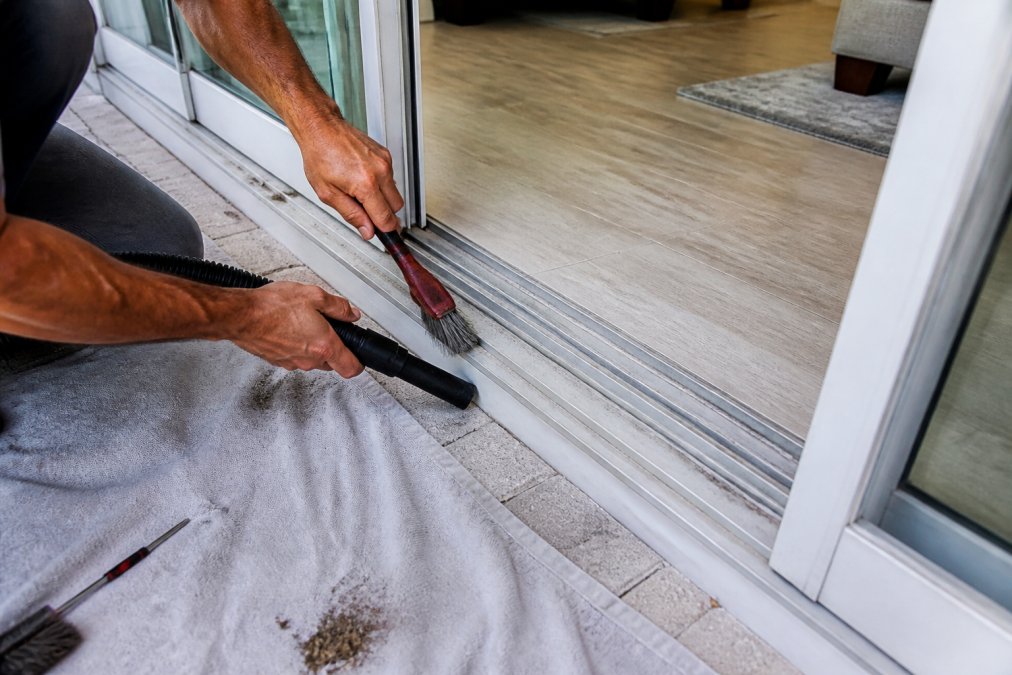
- Vacuum first. Run the crevice attachment along the full length of the bottom track to lift loose sand and grit before anything gets wet.
- Brush the channel. Work a stiff brush into the corners of the track, then vacuum again. Repeat until the brush comes up clean.
- Wash with mild soap solution. Dampen a cloth, wipe the track and frame, and dry immediately, standing water causes corrosion.
- Clean the glass and frame edges. Wipe the vertical frame and the glass edge where it meets the frame. This keeps glass clarity and prevents buildup from transferring to the rollers.
- Dry everything. A dry track is a track that lasts.
Clearing Weep Holes and Debris
Weep holes are the small drainage openings in the bottom frame that let water escape instead of pooling. When they clog, water sits against the frame, and that’s where corrosion and seal failure start. Clear each hole with a cotton swab or small bottle brush, then flush with water and confirm it drains freely. If it doesn’t, the channel behind the hole is packed with debris, a job for a professional.
Removing Salt and Grime from Coastal Doors
Salt spray is the single biggest accelerator of hardware failure in a coastal environment. Rinse frames and tracks with fresh water and mild soap at least monthly during salt-heavy months, and never let salt residue dry on the track. A damp cloth followed by a dry one takes two minutes and buys years of roller life, skip it and you’ll see corrosion within a season.
Best Silicone Lubricant for Sliding Doors (and What to Avoid)
The best product for sliding door tracks is a silicone-based lubricant labeled for door and window hardware. But “silicone lubricant” is a broad category, and the differences matter.
What to Look For on the Label
The right product has three characteristics:
- 100% silicone or silicone-based, not a silicone additive blended into a petroleum carrier
- Dry-film or thin-film formulation, dries to a non-tacky surface rather than staying wet
- Safe for rubber, vinyl, and painted surfaces, stated on the label, not assumed
Dry-film silicone sprays are the standard choice for track and roller contact points because they leave a slick surface without a wet layer that grabs sand. Apply a thin film to a clean track, slide the door back and forth several times, then wipe off the excess, excess lubricant is just another surface for grit to stick to.
Products Commonly Used and Their Trade-offs
How common products actually behave on a sliding door:
- Dry-film silicone spray, the correct choice for tracks and rollers. Dries clean, repels grit, and won’t degrade seals.
- Silicone grease, acceptable for pivot points and lock mechanisms, but too thick for track channels where it collects debris.
- White lithium grease, good for hinges and heavy-duty metal-on-metal contact, but it stays tacky and attracts dust in a track environment.
- PTFE (Teflon) dry lubricants, a reasonable alternative to silicone on metal rollers; less ideal on rubber or vinyl contact points.
- Petroleum-based sprays and greases, collect dust and turn into a sticky paste.
- Cooking spray or generic household oil, gums up within weeks and can stain the frame.
- Graphite powder, fine for locks, messy and ineffective on rolling hardware.
Spraying a petroleum-based product like WD-40 into your track feels like a fix because the door moves freely for a few days. Then the residue attracts grit, the rollers grind, and you’re back to a sticking door with lubricant-coated debris now packed into the channel.
Why WD-40 Harms Your Tracks
WD-40 is a solvent and water displacer, not a long-term lubricant. On a sliding door track it strips whatever factory lubricant remains, then leaves a film that traps sand and dust. Over a few weeks the rollers pick up that grit and flat-spot, exactly the friction the door was fighting before. If you’ve already used it, clean the track with mild soap and water, dry it completely, and reapply a silicone-based lubricant.
How the Wrong Lubricant Can Void Your Warranty
Impact window and sliding door warranties typically include a maintenance clause requiring manufacturer-approved products on moving hardware. Petroleum-based lubricants, abrasive cleaners, and evidence of neglect are the three most common reasons a claim gets denied, and a technician can usually tell what was used by the residue pattern alone.
Silicone-based dry-film lubricant, applied thin, on a clean track, is the only product most sliding doors need. Anything petroleum-based is a short-term fix that creates a long-term problem, and potentially a warranty problem.
Preventative Maintenance for Hurricane Impact Windows
Preventative maintenance for hurricane impact windows is a monthly and seasonal routine, not an annual one. Impact-rated glass and frames are engineered for structural performance under storm loads, but that depends on intact seals, clear drainage, and hardware that latches fully. A door that doesn’t seal completely loses energy efficiency year-round and may not perform as designed when it matters most.
Seasonal Maintenance Schedule for South Florida
| Timing | Task | Why It Matters |
|---|---|---|
| Monthly | Vacuum and wipe tracks, rinse salt residue | Prevents corrosion and friction buildup |
| Monthly | Test lock and latch engagement | Confirms security and seal integrity |
| Quarterly | Clear weep holes, inspect weatherstripping | Maintains moisture drainage |
| Before hurricane season | Full hardware inspection, roller adjustment, track alignment check | Confirms the door seals and locks under storm conditions |
| After any storm | Rinse frames, re-test lock, check for frame shifts | Catches salt spray and impact damage early |
Troubleshooting Common Hardware Failures
Most sliding door failures fall into a few categories, each with a telltale symptom. Diagnose before you touch anything.
Start With the Symptom
The door scrapes or grinds along one edge. This usually means track alignment has shifted, debris has built up under the roller, or the panel has dropped on one side. Run your hand along the track under the affected edge, if you feel grit or a raised lip, clean and inspect before adjusting.
Roller Adjustment: The Fix Most Homeowners Can Handle
Most sliding doors have an adjustment screw on each roller, accessible from the bottom edge of the panel. It’s usually a Phillips head or small hex and raises or lowers the panel on that roller.
- Slide the door to the middle of the track so both rollers are accessible.
- Locate the adjustment screw on the roller at the problem end.
- Turn it a quarter-turn at a time, clockwise typically raises the panel, counterclockwise lowers it, but confirm on your specific hardware.
- Slide the door through its full travel and test.
- Repeat in quarter-turn increments until the door clears the track without scraping and the latch engages.
When to Stop and Call a Professional
Some symptoms are safe to diagnose yourself and some aren’t. Call a qualified technician if:
- The door panel is visibly out of square or the frame has shifted
- A roller is cracked, seized, or has come off its axle
- The glass or the impact-rated glazing unit shows any sign of damage
- The door won’t lock and the strike plate can’t be adjusted to meet the latch
- You’ve adjusted the rollers twice and the door still binds
Match the symptom to the likely cause before you touch a screwdriver. Scraping points to alignment or debris; dragging points to rollers; a smooth slide with no latch points to the strike plate; rattling points to seals. Adjust in quarter-turns, test after each one, and stop when the door resists.
Protecting Your Warranty and Extending Door Lifespan
Warranty preservation comes down to documentation and using the right products. Most impact window and door warranties require you to follow the manufacturer’s maintenance instructions and can be voided by abrasive cleaners, petroleum-based lubricants, or evidence of neglect. Keep a simple log: date, task performed, product used. If you file a claim, that log is your proof.
A few habits extend lifespan more than anything else:
- Clean tracks monthly rather than waiting for a problem
- Use only silicone-based lubricant on moving hardware
- Never force a door that’s binding
- Get an annual inspection from a qualified technician, especially in a coastal environment
- Address small hardware issues before they damage the panel or frame
Frequently Asked Questions
What should I lubricate my sliding glass door with?
Use a silicone-based lubricant specifically made for sliding door tracks and rollers. Silicone lubricant reduces friction without attracting dirt or dust, which keeps your door gliding smoothly. Avoid oil-based products or WD-40 because they leave a sticky residue that collects debris and can damage rollers over time. Apply a thin layer to the track and roller mechanisms every three to six months. If your door still sticks after lubricating, the rollers may need adjustment or replacement, so call a professional for an inspection.
How often should I clean impact window tracks and weep holes?
Clean your impact window sliding door tracks and weep holes at least every three months, and more often if you live near the coast. Salt spray, sand, and pollen build up quickly in South Florida, clogging the small drainage channels that let water escape. A clogged weep hole can cause water to pool inside the frame, leading to corrosion and mold. During hurricane season, check them monthly. A quick vacuum and a damp cloth are usually enough to keep moisture drainage working properly.
How do I know if my sliding door rollers need professional repair?
Signs that your sliding door rollers need professional attention include a door that scrapes the track, requires extra force to open, wobbles side to side, or makes grinding noises. You may also notice visible flat spots or rust on the roller wheels. If lubricating and cleaning the track does not fix the problem, the rollers are likely worn out or misaligned. A technician can replace damaged rollers and realign the door, which costs far less than a full door replacement.
Can I use WD-40 on my sliding door tracks?
No. WD-40 is a solvent, not a lubricant, and it strips away the protective coating on your tracks and rollers. It also attracts dust and dirt, which creates a sticky paste that makes the problem worse over time. Repeated use can accelerate corrosion and damage the roller bearings. Stick with a silicone-based lubricant designed for sliding doors. If you have already used WD-40, clean the track thoroughly with mild soap and water before applying the correct lubricant.
What is the best way to clean impact-resistant glass without damaging the coating?
Use a mild soap solution and a soft, non-abrasive cloth or sponge. Avoid ammonia-based cleaners, abrasive pads, and razor blades because they can scratch or degrade the impact-resistant coating on the glass. Rinse with clean water and dry with a microfiber cloth to prevent water spots. For salt spray residue, a diluted vinegar solution works well, but rinse thoroughly afterward. Regular cleaning preserves glass clarity and helps maintain the structural performance of your impact windows.
How does preventative maintenance for hurricane impact windows save me money?
Preventative maintenance for hurricane impact windows extends the lifespan of your doors and windows by catching small issues before they become expensive repairs. Cleaning tracks, lubricating rollers, and clearing weep holes prevent corrosion and water damage that can compromise seal integrity. A well-maintained impact door also keeps your home more energy-efficient by sealing gaps that let AC escape. Many manufacturers require documented maintenance to honor warranty claims, so keeping a simple log of your upkeep protects your investment.