
Table of Contents
- Why Commercial Sliding Door Maintenance Matters in Florida
- Commercial Sliding Door Repair Cost: Budgeting for Service
- Your Commercial Door Maintenance Checklist
- Sliding Glass Door Track Cleaning Tips That Prevent Downtime
- Sliding Door Roller Replacement Frequency and Signs of Wear
- Safety and Compliance: ADA and AAADM Standards
- Troubleshooting Guide for Facility Managers
- Partner with a Certified Repair Team
- Frequently Asked Questions
Last Updated: September 9, 2026
Why Commercial Sliding Door Maintenance Matters in Florida
Commercial sliding door maintenance Florida represents a unique challenge because of the region’s intense sun, salt air, and seasonal storms. These environmental factors accelerate wear on rollers, tracks, and seals faster than in almost any other climate in the country. When a door fails, it disrupts customer flow, creates security vulnerabilities, and leaks the expensive cooled air your business depends on.
At Smooth Sliders, we have spent over 19 years repairing sliding glass doors across South Florida, and the most common thread we see is neglect. Door maintenance is preventative maintenance: a small investment in regular care prevents the emergency repair that costs far more in lost revenue and urgent service fees. Facility managers who schedule routine inspections avoid the downtime that comes from a door that suddenly stops working during peak business hours.
Commercial sliding door maintenance is the systematic inspection, cleaning, and adjustment of sliding door components to ensure safe, reliable operation and energy efficiency. The goal is to catch small problems, like a misaligned track or a worn roller, before they become full system failures.
Ignoring a sticking door or unusual grinding noise often leads to a complete roller or track failure. This turns a minor adjustment into a full door replacement, which costs significantly more and requires extended downtime for your storefront.
Commercial Sliding Door Repair Cost: Budgeting for Service
Commercial sliding door repair cost varies widely depending on the specific issue, the door’s size, and whether parts need to be sourced. Rather than relying on a single national average, facility managers should budget by understanding what drives the price. Labor, replacement parts like rollers or sensors, and the urgency of the service call all factor into the final invoice.
Most repair companies, including Smooth Sliders, offer free on-site estimates. This allows a technician to diagnose the problem accurately before you commit to any expense. When budgeting, consider that preventative maintenance contracts typically spread costs evenly across the year, avoiding the shock of a large, unexpected emergency bill.
Ask your repair provider about preventative maintenance agreements. These contracts usually prioritize your service calls and can reduce the total cost of ownership for your doors by catching issues during scheduled visits rather than during emergency breakdowns.
Your Commercial Door Maintenance Checklist
A reactive approach to door repair is the most expensive strategy a facility manager can adopt. A structured preventative maintenance program offers significant cost savings compared to focusing solely on emergency fixes. Below is a checklist that goes beyond the basics, tailored to the demands of a commercial environment and the Florida climate.
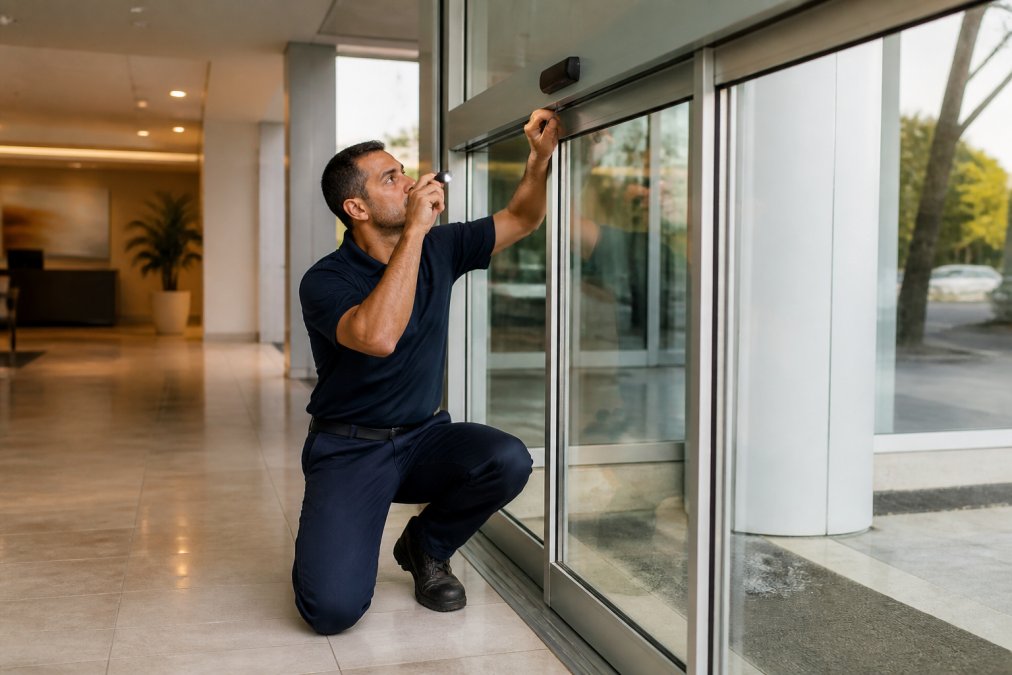
Monthly Visual Inspection (15 minutes per door)
- Track and rollers: Use a flashlight to inspect the track for sand, salt residue, or debris buildup. Look for flat spots on rollers by examining the contact surface.
- Weather stripping and seals: Run your hand along the perimeter seals. Check for cracks, gaps, or compression that would allow air or water infiltration.
- Hardware and fasteners: Check that all screws on the rollers, hinges, and locks are tight. Vibration from daily use can loosen them over time.
- Safety sensors (if automatic): Wipe sensor lenses with a clean, dry cloth. Verify that the sensor indicator lights are functioning.
- Operation test: Slide the door manually (if applicable) to feel for smooth movement. Note any unusual resistance or noise.
Quarterly Detailed Service (1-2 hours per door)
- Deep clean the track: Vacuum thoroughly, then use a mild detergent solution to remove salt film and oily residue. Rinse with clean water and dry completely.
- Lubricate moving parts: Apply a dry silicone lubricant to rollers, tracks, and hinges. Avoid petroleum-based products that attract dust and sand.
- Adjust roller tension: Use the adjustment screws to level the door. A door that sags or scrapes the track needs immediate attention.
- Test safety features (automatic doors): Check that sensors reverse the door on impact and that the door opens fully. Verify that the opening force meets AAADM guidelines.
- Inspect for corrosion: In coastal areas, salt air accelerates corrosion on metal components. Look for rust or pitting on tracks, rollers, and frames.
Annual Professional Inspection
Even with a diligent in-house program, an annual inspection by a certified technician is essential. They can measure roller wear, check the alignment of the track, and test the door’s compliance with ADA and AAADM standards. This inspection also provides documentation that supports warranty claims and liability defense.
Create a log for each door, noting the date of every inspection, the tasks performed, and any parts replaced. This history is invaluable for diagnosing recurring issues and proving due diligence in the event of an accident.
By adopting this proactive schedule, you shift from paying for emergency repairs to investing in predictable, budget-friendly maintenance. Your doors will last longer, operate more safely, and maintain their energy efficiency.
Sliding Glass Door Track Cleaning Tips That Prevent Downtime
Standard cleaning advice focuses on removing visible dirt, but in Florida, the real enemy is invisible: salt air and humidity. These environmental factors create a corrosive film that acts like sandpaper on rollers and tracks, accelerating wear and leading to premature failure. To protect your commercial doors, you need a cleaning routine that addresses these unique challenges.
The Salt Air Problem
Within a few miles of the coast, salt particles settle on every surface, including your door tracks. When mixed with moisture from Florida’s high humidity, they form a conductive, abrasive slurry. This not only wears down metal components but can also interfere with the electrical contacts in automatic door sensors. A simple wipe-down with a dry cloth is insufficient.
The Hurricane Aftermath
After a storm, tracks can be filled with fine sand, leaves, and debris that gets blown into the door mechanism. If not removed promptly, this debris can cause the door to jam or the rollers to seize. In the days following a hurricane, prioritize track cleaning to prevent long-term damage.
Step-by-Step Cleaning Procedure
- Remove loose debris: Use a vacuum with a crevice tool to extract sand, dust, and leaves from the track. Do not use compressed air, as it can blow debris deeper into the mechanism.
- Apply a mild detergent solution: Mix a few drops of dish soap with warm water. Dip a soft cloth or sponge into the solution and wipe down the entire track, including the bottom and sides. This breaks up the salt film and oily residue.
- Rinse with clean water: Use a damp cloth with plain water to remove any soap residue. Soap can attract dirt if left behind.
- Dry thoroughly: Use a clean, dry cloth to remove all moisture. This is critical in Florida’s humid climate, as any remaining water can promote rust.
- Lubricate with a dry silicone spray: Apply a thin, even coat of dry silicone lubricant to the track and rollers. This type of lubricant repels dust and moisture, unlike oil-based products that create a sticky mess.
Never use grease or WD-40 on sliding door tracks. These products attract dust and sand, forming a grinding paste that accelerates roller wear. Additionally, they can degrade rubber weather stripping and void your manufacturer’s warranty.
Frequency of Cleaning
For commercial doors in Florida, especially those within 10 miles of the coast, clean the tracks at least monthly. During peak tourist seasons or after a storm, increase the frequency to bi-weekly. Interior doors in climate-controlled environments may only need quarterly cleaning.
The Role of Professional Maintenance
While routine cleaning is a task your facility staff can handle, a professional technician can perform a deeper cleaning that includes disassembling the roller assembly and inspecting for hidden corrosion. They can also apply a protective coating to metal parts to resist salt damage. This is part of a comprehensive preventative maintenance plan that extends the life of your doors and reduces the risk of unexpected downtime.
Sliding Door Roller Replacement Frequency and Signs of Wear
Sliding door roller replacement frequency depends on usage volume, door weight, and environmental exposure. In a high-traffic commercial setting, rollers may need replacement every few years, while a lower-traffic entrance can last much longer. Rather than relying on a strict timeline, watch for the physical signs of wear.
A door that is heavy to push, makes a grinding or scraping sound, or sits unevenly in the frame is signaling roller trouble. If you notice the bottom of the door scraping the track or the door jumping when moved, the rollers have likely developed flat spots. Continuing to use a door in this condition damages the track itself, turning a simple roller swap into a costly track replacement.
The thing nobody tells you about roller replacement is that the track condition matters as much as the roller. If the track has grooves or burrs from worn rollers, new rollers will fail quickly.
Safety and Compliance: ADA and AAADM Standards
Safety and compliance standards for automatic sliding doors are governed by the Americans with Disabilities Act (ADA) and the American Association of Automatic Door Manufacturers (AAADM). The ADA requires that door openings provide adequate clear width and that automatic doors function without requiring tight grasping or twisting to operate. AAADM certification verifies that technicians have the training to inspect and maintain automatic doors to meet these safety standards.
A common mistake is assuming compliance ends at installation. Automatic doors require regular inspections to ensure sensors are calibrated correctly and safety features function as intended. A door that closes too quickly or fails to reverse on impact is a liability risk and a violation of accessibility requirements.
For facility managers, the key is to verify that any technician working on your automatic doors holds AAADM certification. This ensures they understand the specific safety standards that protect your customers and your business from liability, as outlined by the AAADM standards for automatic door safety.
Troubleshooting Guide for Facility Managers
When a door malfunctions, facility managers need a quick reference to determine whether it is a minor fix or an emergency. Start with these common issues:
- Door is hard to slide: Check the track for debris and the rollers for visible wear. Clean the track and test again.
- Door is off-track: Do not force it back. Forcing a door can damage the rollers and the frame. Call a professional.
- Door won’t lock: Inspect the lock mechanism for misalignment. If the door sags, the rollers are likely worn, causing the latch to miss its strike plate.
- Automatic door won’t open: Check that the safety sensors are clear of obstructions. If the sensors are clean, the issue is likely electrical or mechanical, requiring professional diagnosis.
- Excessive noise during operation: This typically indicates dry or failing rollers or a belt issue in the operator mechanism.
When in doubt, isolate the door with signage and contact a certified technician. Operating a compromised door risks injury to customers and further damage to the system. Professional installation and repair services provide the expertise to handle complex issues safely.
Partner with a Certified Repair Team
Preventative maintenance is the most effective strategy for managing commercial sliding doors, but it requires a partner with the right expertise. A certified repair team brings the diagnostic skills and replacement parts necessary to keep your doors operating safely and efficiently. They also provide the documentation you need for warranty claims and compliance audits.
When selecting a service provider, look for a company with verifiable experience in commercial systems. Ask about their response times for emergency calls and whether they carry insurance and references. A reliable partner, like the team at Smooth Sliders, offers mobile service that comes to your location, minimizing the disruption to your business operations.
Energy efficiency is another critical benefit of professional maintenance. A door with worn weather stripping or a poor seal leaks conditioned air, forcing your HVAC system to work harder. Addressing these issues through regular service improves your building’s energy performance and reduces utility costs, a point echoed by the U.S. Department of Energy’s guidance on air sealing for commercial buildings.
Commercial sliding door maintenance is an ongoing responsibility that directly impacts safety, security, and operating costs. By following a structured maintenance checklist and partnering with a certified team, you protect your investment and ensure your doors serve your business reliably for years. Smooth Sliders brings over 19 years of experience to every job, offering same-day service and free estimates to get your doors back on track. Florida Building Commission resources for commercial building maintenance can provide additional regulatory context for your property. Get a free estimate and restore the seamless function your storefront deserves.
Frequently Asked Questions
How often should commercial sliding doors be inspected?
For automatic sliding doors, schedule a professional inspection at least twice a year to meet AAADM recommendations. Manual doors benefit from a quarterly check. High-traffic storefronts may need monthly visual inspections of the track and rollers. Regular inspections catch worn rollers and misaligned tracks early, preventing costly emergency repairs and keeping your commercial sliding door maintenance plan on schedule.
What should I lubricate my sliding glass door with?
Use a silicone-based lubricant specifically designed for sliding door tracks and rollers. Do not use grease or oil-based products, as they attract dust, sand, and grit, which accelerates wear. Clean the track thoroughly before applying lubricant. Spray the lubricant on the rollers and the bottom of the track, then slide the door back and forth a few times to distribute it evenly.
Does humidity affect sliding glass door performance in Florida?
Yes. High humidity and salt air can corrode metal tracks, rollers, and fasteners over time. This corrosion leads to sticking doors and premature roller failure. Regular cleaning and a silicone-based lubricant create a barrier against moisture. For coastal properties, consider rollers with sealed bearings and corrosion-resistant materials to extend the lifespan of your sliding door system.
What are the common problems with sliding glass doors?
The most frequent issues are dirty or misaligned tracks, worn rollers, and loose or damaged weather stripping. These cause doors to stick, jump the track, or allow air and water infiltration. Sensor calibration problems are common on automatic doors. A professional maintenance service addresses these root causes, preventing the need for more expensive commercial sliding door repair cost later.
Do I need a permit to replace a sliding glass door in Florida?
Yes. Replacing a sliding glass door typically requires a building permit in Florida, especially when changing the opening size or structural framing. Permits ensure the work meets the Florida Building Code, including impact-resistance requirements in high-velocity hurricane zones. Check with your local building department before starting a replacement project to avoid fines and ensure your installation is compliant.